
Ordering nigiri for the first time can feel a little confusing. The menu may include unfamiliar fish, different cuts, and words you have never seen before. Still, nigiri is quite simple once you understand the basics.
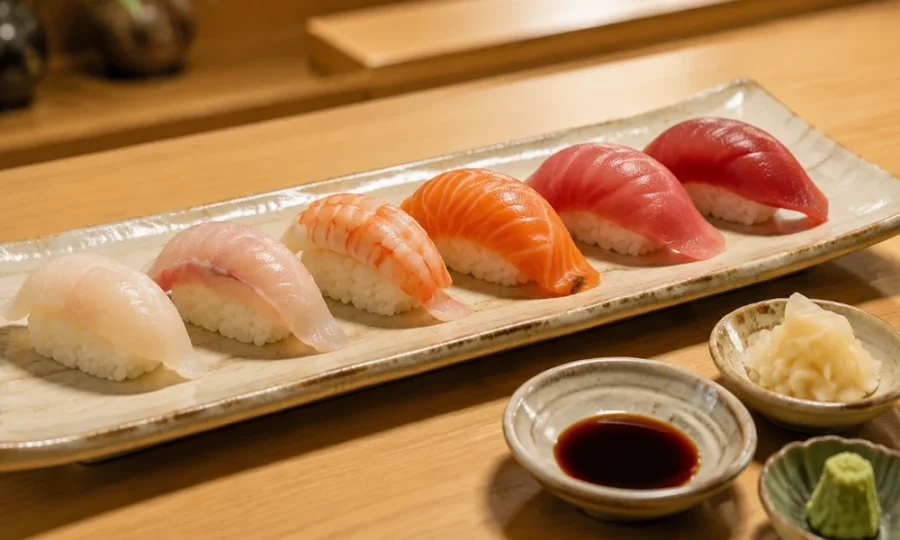
Nigiri usually consists of a small mound of seasoned rice topped with a thin slice of seafood. Some pieces may include cooked ingredients, a small amount of wasabi, or a light brush of sauce. The goal is to enjoy the balance between the topping and the rice.
How Many Pieces of Nigiri Should You Order?
Nigiri is normally ordered by the piece or as a two-piece serving. The right amount depends on your appetite and whether you are ordering anything else.
Four to six pieces may be enough for a light meal, especially with soup, salad, or another small dish. Eight to twelve pieces can make a more complete meal for many adults.
Beginners may want to order a few pieces at a time. This allows you to discover what you like without committing to a large plate. You can always order more if you are still hungry.
What Nigiri Should You Try First?
A common approach is to begin with lighter flavors and gradually move toward richer ones. This keeps a strong or fatty fish from covering the delicate taste of the next piece.
You might start with mild white fish or shrimp. Salmon and lean tuna can come next. Richer options, such as fatty tuna, eel, or strongly flavored seafood, usually work well near the end.
This progression is a helpful guide, but it is not a strict rule. If you want to begin with salmon because it feels familiar, that is perfectly fine.
How Should You Use Soy Sauce?
Nigiri is often seasoned before it reaches the table, so taste a piece first when possible. If you want soy sauce, use only a small amount.
Turn the nigiri gently and dip the fish side into the sauce. Dipping the rice can cause it to absorb too much soy sauce or fall apart. There is no need to soak the entire piece.
Some nigiri arrives with sauce already brushed on top. In that case, extra soy sauce may not be needed.
What Are Ginger and Wasabi For?
Pickled ginger is meant to refresh your mouth between different types of nigiri. Eat a small slice after one kind of fish and before moving to another. It is generally not used as a topping.
Wasabi adds heat and sharpness. A small amount may already be placed between the fish and rice. If you want more, add a tiny dab directly to the fish. Mixing wasabi into soy sauce is common in casual dining, although some traditional settings treat them separately.
The best choice is the one that lets you enjoy your meal without overpowering the fish.
What Textures Should You Expect?
Texture is a big part of eating nigiri. Salmon often feels smooth and rich. Tuna can be soft yet firm, while shrimp has a springier bite. Eel is usually tender and may have a warm, glazed surface. White fish may feel lean, clean, and slightly chewy.
The rice should be soft enough to hold together but not packed into a hard block. Ideally, the fish and rice separate gently as you chew.
Trying different textures can help you understand your preferences. You may enjoy firm seafood even if softer pieces are not for you.
Should You Use Chopsticks or Your Hands?
Either choice is acceptable. Nigiri was traditionally eaten by hand, and using clean fingers can make it easier to turn and dip the piece. Chopsticks are also completely suitable.
Try to eat each piece in one bite when its size allows. If it is too large, taking two bites is better than feeling uncomfortable.
Is It Okay to Change the Traditional Order?
Yes. Nigiri has customs, but a meal should still feel welcoming. You may request cooked seafood, avoid certain ingredients, or choose only familiar fish. Dietary needs and personal comfort matter more than following every traditional detail.
Use etiquette as a helpful guide rather than a test. Order a manageable serving, begin with approachable flavors, pay attention to texture, and adjust the condiments lightly. The best first nigiri experience is one that leaves you curious enough to try another piece.
This post was written by a professional at Fortu. Fortu stands out among the top Restaurants St Petersburg FL, offering an elevated Pan-Asian dining experience in the heart of St. Petersburg, Florida. Celebrating Asia’s vibrant and diverse culture, Fortu introduces bright and bold flavors to a bright and bold city with a menu of locally and sustainably sourced options, from small bites to hearty delicacies. Whether winding down from a beach day or celebrating a special occasion, guests can enjoy a lush, alluring atmosphere and an authentic taste of Asia’s divine cuisine at one of the finest Restaurants In Downtown St Petersburg FL.